NAATI-CERTIFIED INTERPRETERS · SINCE 2009
Interpreter Services Across Australia by NAATI-Certified Interpreters
Professional interpreting services in 190+ languages: onsite, video and telephone interpreters for courts, government, healthcare, business and conferences, Australia-wide. Every booking is matched to the setting, handled confidentially and confirmed in writing. If documents need translating as well, our NAATI certified translation service can handle them alongside your booking.
No obligation · Fast response
Phone and video interpreting, subject to availability
Professional Interpreting Services Across Australia
When clear communication matters most, you need an interpreter you can trust. Our NAATI-certified interpreters work across courts and tribunals, government agencies, hospitals and health services, businesses and conferences, so your message is understood clearly and accurately every time.
We provide onsite, video and telephone interpreting in more than 190 languages, Australia-wide, in capital cities and regional areas. Interlingual has supported government departments, universities, law firms, health and disability services and community organisations since 2009, and is a NAATI-endorsed language service provider. If your appointment comes with documents, we can arrange certified translation alongside the booking.
Accurate, confidential interpreting for government, business and communities across Australia
Clear communication matters in every setting. From government and community services to legal, health, mining and corporate environments, our interpreters help people communicate accurately, confidentially and with cultural understanding.
Accuracy you can count on
Our NAATI-certified interpreters meet Australia’s national standard for interpreting. Every assignment is interpreted completely and accurately, using the terminology of the setting, not just close enough.
Strict confidentiality
Everything shared in an interpreting session stays private. Our interpreters work to the AUSIT Code of Ethics and NAATI’s code of conduct, so conversations are never recorded, shared or disclosed, and we can sign client confidentiality agreements on request.
Available when you need them
Phone and video interpreting can often be arranged the same day, subject to availability. Onsite bookings are best made a few business days ahead so we can match the right interpreter; urgent onsite requests are welcome and we will tell you quickly what is possible.
Cultural sensitivity, not just language
Language is only one part of communication. Our interpreters understand the cultural meaning behind the words, helping everyone feel heard, respected, and understood.
Languages and dialects covered across Australia
Endorsed language service provider; certified interpreters
Onsite, conference, consecutive, video, phone and whispered interpreting
• Interpreting modes
Choose the Type of Interpreting That Suits You
Choose the mode that suits the setting. If you are not sure, tell us about the appointment or event and we will recommend one.
Onsite (face-to-face) interpreting
A NAATI-certified interpreter attends in person. This is the mode most courts, tribunals, hospitals and formal interviews ask for, and it suits hearings, affidavits, medical consultations, police and workplace interviews, community consultations and site visits anywhere in Australia, including regional areas. Tell us the date, time, address, language, setting and expected duration; we match an interpreter with experience in that setting and confirm the booking in writing.
- In-person presence for courts, hearings and sensitive appointments
- Australia-wide, including capital cities and regional locations
- Advance booking recommended; urgent requests welcome
Simultaneous and conference interpreting
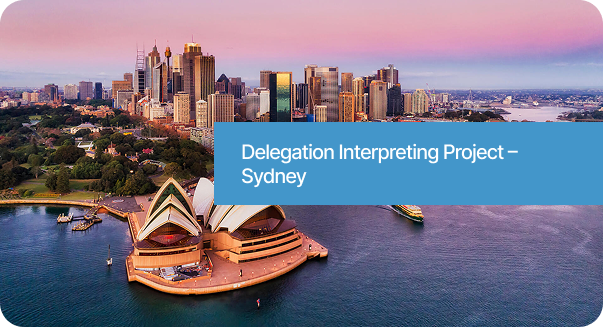
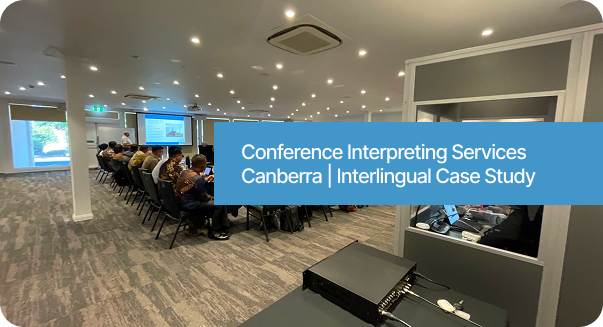
Interpreters work in real time while the speaker talks, delivered to delegates through headsets. It is the standard for conferences, summits, international delegations, training days and multilingual events. For longer simultaneous interpreting sessions, interpreters generally work in pairs for each language, from a soundproof booth or with a portable tour-guide system, and we supply the conference interpreting equipment with an on-site technician. Remote simultaneous interpreting is available for online and hybrid events. See how we supported a Department of Home Affairs international delegation in Sydney, or read our guide to how simultaneous interpretation works.
- Two interpreters per language for longer sessions
- Booth, portable tour-guide system or remote delivery
- Equipment and technician supplied
Consecutive interpreting
The speaker pauses every few sentences while the interpreter conveys the message. No equipment is needed and precision is high, which suits negotiations, interviews, depositions, medical consultations, small formal meetings, site inspections and speeches to small groups. Allow roughly double the time you would for a single-language meeting.
- No equipment needed
- High accuracy and detail
- Suits legal, medical and formal settings
Video interpreting
A qualified interpreter joins over Zoom, Microsoft Teams, Webex or your telehealth platform. It suits regional and remote clients, telehealth, case conferences, hybrid meetings and appointments where seeing the interpreter matters. It works on any device. Auslan and other sign-language interpreting can be arranged on request, subject to availability. Some courts and tribunals require the interpreter to attend in person; check with the registry or ask us.
- Works on any device, no travel
- Telehealth, hybrid meetings and regional clients
- Quick to arrange, subject to availability
Telephone interpreting
A three-way call with a professional interpreter, for short calls, helplines, follow-ups, appointment reminders and situations where in-person interpreting is not practical. We can dial your client into the call or join a call you set up. It is the most cost-effective option for short, straightforward conversations.
- Short calls, helplines and follow-ups
- We can dial your client in
- Often available at short notice, subject to availability
Whispered interpreting (chuchotage)
The interpreter sits beside one or two listeners and interprets quietly in real time. It suits site visits, small delegations, board meetings and sensitive one-on-one settings where a booth is not practical. For larger groups, simultaneous interpreting with a portable tour-guide system is the better choice.
- No equipment required
- Minimal disruption to the meeting
- Ideal for one or two listeners
Not sure which format suits your situation? We'll help you choose.
Interpreters for every setting
Most of our interpreting work is for courts and tribunals, government agencies, health and disability services, businesses, conference organisers and culturally and linguistically diverse (CALD) communities across Australia. Each setting has its own vocabulary, protocol and credential expectations, and we match interpreters accordingly.
Courts, tribunals and legal
Hearings, trials, tribunal matters, police interviews, prison visits, mediations, affidavits and law-firm meetings. We provide NAATI Certified Interpreters and, where the matter calls for it and the language allows, Certified Specialist Legal Interpreters, and we can provide the interpreter’s credentials to the court or your firm before the day. Interlingual is a panel provider to the NSW Department of Communities and Justice.
Government and community services
Client interviews, case management, consultations, community meetings and public events for Commonwealth, state and local government and the community organisations they fund. We work with purchase orders and panel arrangements, and we have supported ACT Government Community Services and the Ethnic Communities Council of WA, including short-notice bookings.
Healthcare, disability and NDIS
Hospital and GP consultations, specialist and allied-health appointments, mental health, aged care, disability services and NDIS planning meetings. NAATI Certified Specialist Health Interpreters are available in many languages, and our interpreters understand consent, privacy and the pace of a clinical conversation. Clients include The Shepherd Centre.
Business, industry and corporate
Negotiations, board and shareholder meetings, technical commissioning and training, site inductions, HR interviews and customer meetings. We match interpreters with relevant industry background and can sign your confidentiality agreement before the engagement.
Conferences, delegations and events
Multilingual conferences, international delegations, study tours, trade missions and ministerial visits, with interpreters and equipment supplied together. Recent work includes a Department of Home Affairs international delegation programme in Sydney and a five-day University of Wollongong delegation programme in Canberra.
Related: Home Affairs case study · University delegation case study · Equipment hire
NAATI-certified interpreters: what the credentials mean
NAATI (the National Accreditation Authority for Translators and Interpreters) is Australia’s certifying body for interpreters. Interlingual is a NAATI-endorsed language service provider, and we tell you which credential level is available in your language before you book.
- Certified Conference Interpreter – simultaneous and consecutive interpreting at conferences, summits and high-level meetings.
- Certified Specialist Interpreter (Legal) and (Health) – complex legal and health settings such as courts, tribunals, hospitals and mental-health consultations.
- Certified Interpreter – the standard credential for most professional assignments, including government, business and community settings.
- Certified Provisional Interpreter – general dialogue settings; often the highest level available in newer or smaller community languages.
- Recognised Practising Interpreter – languages in which NAATI does not yet offer certification testing; the practitioner has met NAATI’s training and experience requirements.
Courts and tribunals generally ask for the highest credential available in the language. For some of the 190+ languages we work in, certification testing is not yet offered, so we engage Recognised Practising interpreters or the most experienced practitioners available and say so up front. Read more in our article on why NAATI certification matters.
Australia-wide: capital cities and regional areas
Onsite interpreters are available Australia-wide, including Sydney, Melbourne, Brisbane, Canberra, Perth, Adelaide and regional locations, subject to availability, and we arrange travel for regional and remote assignments, with any travel costs quoted before you confirm.
Video and telephone interpreting are available anywhere in Australia, which is often the practical answer for regional clients, short appointments and urgent requests. Each city page explains the local interpreting and translation services in more detail.
How booking and pricing work
- Tell us what you need – language, date and time, duration, location or platform, the setting (court, hospital, meeting, conference) and any preference, such as a female interpreter or the same interpreter as last time.
- We check availability and send a written quote, usually the same business day.
- You confirm by email or purchase order, and we confirm the interpreter and the arrangements in writing.
- The interpreter is briefed on the setting and any reference material you provide, and arrives or dials in on time.
What affects the price: the language and the credential level required; the mode (onsite, video, phone, or simultaneous with equipment); the duration, with a minimum booking period for onsite and remote assignments; the location and any travel; the specialisation (legal, health, technical); how much notice we have; and, for conferences, the equipment and technician required. We quote all fees up front with no hidden charges, government and corporate clients can be invoiced against a purchase order, and cancellation terms are set out in every quote.
• Join the organisations who trust us
Trusted by government, universities and community organisations
Interlingual’s interpreting clients include the NSW Department of Communities and Justice, ACT Government Community Services, the Ethnic Communities Council of WA and The Shepherd Centre, and we have delivered delegation interpreting for the Department of Home Affairs and the University of Wollongong. We are a NAATI-endorsed language service provider and have supported Australian organisations since 2009.


Interpreters in the languages we are asked for most
Each language page covers interpreting and NAATI certified translation in that language.


Interpreting and translation by sector
Government, legal and health services each have their own protocols and terminology; these pages explain how we work in each.



Interpreting in your city
Onsite interpreters Australia-wide, subject to availability, with video and telephone interpreting anywhere in Australia.






• Our work
Interpreting work we have delivered
• FAQs
Frequently asked questions about interpreting
What is the difference between an interpreter and a translator?
An interpreter works with spoken or signed language in real time, while a translator works with written documents. If you need someone for an appointment, meeting, hearing or call, you need an interpreter. If you need a certificate, contract or other document converted into another language, you need a translator. Interlingual provides both services across Australia.
What is a NAATI-certified interpreter?
NAATI is Australia’s official certifying body for translators and interpreters. A NAATI-certified interpreter has passed rigorous testing in language proficiency, ethics and interpreting skill, and is the standard required by government agencies, courts and hospitals. We work with NAATI-credentialled interpreters across Australia, with the appropriate credential level confirmed for your language and assignment, including Certified Specialist Health and Legal Interpreters where appropriate and available.
What types of interpreting do you offer?
We offer six: onsite (face-to-face), simultaneous and conference, consecutive, video remote, telephone and whispered interpreting. Onsite suits courts, hospitals, government appointments, business meetings and community events; video and telephone suit short appointments, telehealth and regional clients; simultaneous interpreting with headsets suits conferences and delegations.
How much does an interpreter cost in Australia?
Interpreting fees depend on the language, location, duration, mode (on-site, phone or video) and the level of specialisation required (for example medical or legal). Most providers charge per hour with a minimum booking period. For an accurate, no-obligation quote tailored to your assignment, request a free quote and our team will usually respond the same business day.
How much notice do you need to book an interpreter?
We recommend booking onsite interpreters a few business days ahead, and earlier for less common languages or specialised settings. Phone and video interpreting can often be arranged at short notice, subject to availability. Contact us and we will tell you quickly what is possible.
Can I book an interpreter for medical or legal appointments?
Yes. Interlingual provides NAATI Certified Specialist Health Interpreters for hospitals, GP consultations, allied health, mental health and aged-care settings, and Certified Specialist Legal Interpreters for courts, tribunals, police interviews, mediations and law-firm meetings. Our specialists understand the terminology, procedures and sensitivities of each environment.
What is the difference between simultaneous and consecutive interpreting?
In simultaneous interpreting the interpreter speaks at the same time as the speaker, usually through headsets, so the event runs at normal speed; it needs two interpreters per language and, for in-person events, a booth or portable tour-guide system. In consecutive interpreting the speaker pauses and the interpreter then conveys the message; it needs no equipment but roughly doubles the meeting time. Conferences and delegations usually need simultaneous; meetings, interviews and consultations usually suit consecutive.
Do courts and tribunals accept video or telephone interpreting?
Many hearings and formal interviews require the interpreter to attend in person, while some directions hearings, short matters and interviews can proceed by video or phone. Check the court or tribunal’s requirements, or tell us the matter and we will advise which mode is accepted and which NAATI credential is expected.
Do you supply interpreting equipment?
Yes. For simultaneous interpreting we supply soundproof booths, interpreter consoles, infrared receivers and headsets, portable tour-guide systems and an on-site technician, Australia-wide, subject to availability. See our conference interpreting equipment hire page for details.
Can I request a particular interpreter, or a female or male interpreter?
Yes. Tell us when you book and we will do our best to match the request, subject to availability. Many clients ask for the same interpreter for ongoing matters so the client and interpreter are familiar with each other.
What do you need from me to prepare a quote?
The language, date and time, expected duration, location or video platform, the type of setting and whether any documents will be used. For conferences: the number of attendees, languages, days and sessions, and the venue. The more context you give, the better we can match the interpreter.